
 Italiano
 Français
 Deutsch
 Español
 日本語
日本語 한국어
한국어 Português

Wheelchairs: Practical Tips
Wheelchair sizes and dimensions: seat width, overall width, doors and lifts
People who call us hardly ever ask “which model do you recommend?”. They ask whether it fits in the lift, whether Dad will fit in it, whether it copes with cobblestones. Those are the right questions, and the answer comes down to four numbers: seat width, overall width with the wheels on, weight capacity and the weight of the chair itself. Here is how to measure them, and the sizes of the models we rent.
Seat width
The seat is measured hip to hip, with the person sitting and wearing the clothes they will actually wear. Most adults fall between 43 and 46 cm (17-18 in); below 40 cm (16 in) you move to the narrow models, above 60 cm (24 in) to the bariatric ones. A seat that is too wide isn’t comfortable: the torso slides sideways and after a few hours it hurts. One that is too narrow simply can’t be used. If you don’t have a tape measure to hand, the person’s height and weight are enough when you order: we pick the right size.
Overall width, the one that has to get through the door
The number that decides everything is a different one, and nobody measures it: the overall width with the wheels on, which adds another 15-20 cm (6-8 in) to the seat. An open standard wheelchair is therefore roughly 60 to 70 cm (24-28 in) wide; a transit chair, with its small wheels, is 8-10 cm (3-4 in) narrower than the same self-propelled model. This is the figure to compare with the bathroom door and the lift, not the seat width.
In the historic buildings of central Rome, lifts with a 60 cm (24 in) opening are not unusual, and there a standard chair only goes in folded, that is with the person already out of it. If the lift is small there is only one way: a model with a 40-43 cm seat, which goes through open. You pay for it in comfort and capacity (90 kg against 120), so choose it only if you really need it. Before booking, measure the clear width of the room door and of the lift, or ask the property: those are the two figures we need to tell you which model to take.
The weight of the person using it
This is the limit people overlook most often, and the only one that leaves no room for approximation. Standard models carry 120 kg (265 lb), narrow ones 90 kg (198 lb), bariatric ones 180 kg (397 lb) with a seat of 60 cm or more; folding electric wheelchairs go from 120 to 150 kg (265-330 lb). Exceeding the capacity doesn’t mean the chair breaks straight away: it means the frame flexes, the wheels wear unevenly and the brakes hold less.
Who pushes
Transit means small rear wheels: a companion pushes, the person sitting can’t reach any handrims. It’s light, around 14 kg (31 lb), folds well and fits in a car boot. Self-propelled means big wheels with handrims: the person sitting moves on their own. It costs two kilos more and a little extra width, but it changes the day for anyone with strong arms. The question isn’t which is better, it’s who will be pushing. If someone is always alongside, the transit chair is easier to handle. If the person wants to move around the room on their own, the self-propelled one is no luxury.
A leg in a cast or a brace
With a cast or a brace the leg has to stay straight, and normal footrests aren’t enough. On the self-propelled wheelchair and on the narrow-passage model the footrests can be replaced, on request, with adjustable elevating leg rests: say so when you order. If the person struggles to stand up, the flip-up armrests let you slide them sideways from the bed to the chair without getting them to their feet.
Where you’ll use it
In Rome this question carries a weight it has nowhere else. Cobblestones vibrate, and on solid tyres all of that vibration reaches the back: for the historic centre you need wheels made for the pavé, and it’s worth knowing before you find yourself in Via dei Coronari. Indoors, at home or in a hotel room, everything changes: what counts is the turning circle, armrests that flip up for the bed-to-chair transfer, and whether it gets through internal doors, which are narrower than entrance doors.
Manual or electric
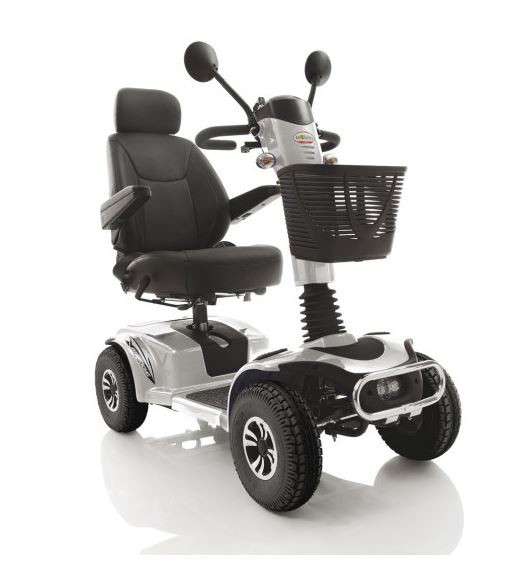
An electric wheelchair makes sense when the distances are long or the companion doesn’t have the strength to push for hours. The folding models carry 120-150 kg and go in a car; the full-size ones are more comfortable and more stable, but they don’t fold, they don’t fit in small lifts and we advise against them indoors. The downside is weight and charging: they need charging every night, and in an apartment without a socket nearby that is a complication to reckon with.
The sizes of the models we rent
| Model | Seat | Capacity | Weight | Folds | Small lifts | Flip-up armrests |
|---|---|---|---|---|---|---|
| Transit wheelchair | 43-46 cm (17-18 in) | 120 kg (265 lb) | about 14 kg (31 lb) | yes | only folded | yes |
| Self-propelled wheelchair | 43-46 cm (17-18 in) | 120 kg (265 lb) | about 16 kg (35 lb) | yes | only folded | yes |
| Narrow-passage wheelchair | 40-43 cm (16-17 in) | 90 kg (198 lb) | about 14 kg (31 lb) | yes | yes | yes |
| Paediatric wheelchair | 35 cm (14 in) | 90 kg (198 lb) | about 14 kg (31 lb) | yes | yes | yes |
| Bariatric wheelchair | 60 cm (24 in) and over | 180 kg (397 lb) | about 26 kg (57 lb) | yes | no | yes |
| Folding electric wheelchair Easy | 43-46 cm (17-18 in) | 120 kg (265 lb) | — | yes | only folded | — |
| Folding electric wheelchair Comfort | 43-46 cm (17-18 in) | 150 kg (330 lb) | — | yes | only folded | — |
| Full-size electric wheelchair | 46 cm (18 in) | 110 kg (243 lb) | — | no | no | — |
If you don’t know where to start, the configurator takes you to the right model in three questions.
Buy or rent
For permanent use you buy, with a medical prescription. For a set period, an operation, a convalescence, a holiday, renting costs a fraction: with us a manual wheelchair starts at 48 euros for up to five days. We deliver to your hotel or apartment in Rome and collect at the end, so the chair never has to be transported or stored. We’ve been doing this since 2009, and the measurement customers get wrong most often is always the same one: the lift. The manual wheelchairs are here, with seat width and capacity for each model, and the electric ones here.